Economic Data Under Fire from Cuts and Political Pressure in US


The Bureau of Labor Statistics, which tracks important data like inflation and employment, has cut back on its data collection this year due to government funding shortfalls. This has increased concerns that pressure from the Trump administration is undermining the reliability of U.S. economic statistics. These changes have heavily affected the quality of the nation’s economic indicators. The BLS recently announced it would no longer collect consumer price data from several cities, including Lincoln, Nebraska; Provo, Utah; and Buffalo, New York. Additionally, by August, it plans to discontinue collecting producer price information for dozens of industries spanning manufacturing sectors. The stated reason is as simple as insufficient resources to sustain previous levels of data gathering.
The current trend is part of a bigger issue in that since the mid-1990s, federal statistical agencies have seen a steady fall in real-terms funding, even as the cost of conducting surveys and overseeing data collection has risen. The price is in the readiness of Americans to participate in government surveys that—participation has drastically fallen to 20 percent post-pandemic. In order to manage these limitations, the BLS has downsized its staff and relocated to cheaper office space. But the staff shortage, particularly of those that perform face-to-face price checks and surveys, has meant that statisticians have had to become increasingly dependent on estimations. Though these imputations are generally routine, the share of data that is estimated instead of being observed has recently exploded to almost a third of all prices in the inflation index.
This rising reliance on estimation adds to the uncertainty in inflation numbers that are critical in the development of the monetary policy of the nation, modification of social security compensations, and business decision-making. These federal statistics have been termed by former commissioner of BLS, William Beach, as the knowledge infrastructure that ensures stable operation of the economy. In case of understating inflation, there is a risk of benefits and wages not keeping pace with real costs, to the detriment of millions of Americans, or excessive Federal Reserve interest rate increases. Although there are increasing concerns about the information being less reliable, the BLS is bound by the law to release economic data. The diminished capacity of the agency has already led to the cancellation of some of the important data series, like breakdowns of wages by type of job and price tracking of some industrial products, factors that affect the bigger economic indicators.
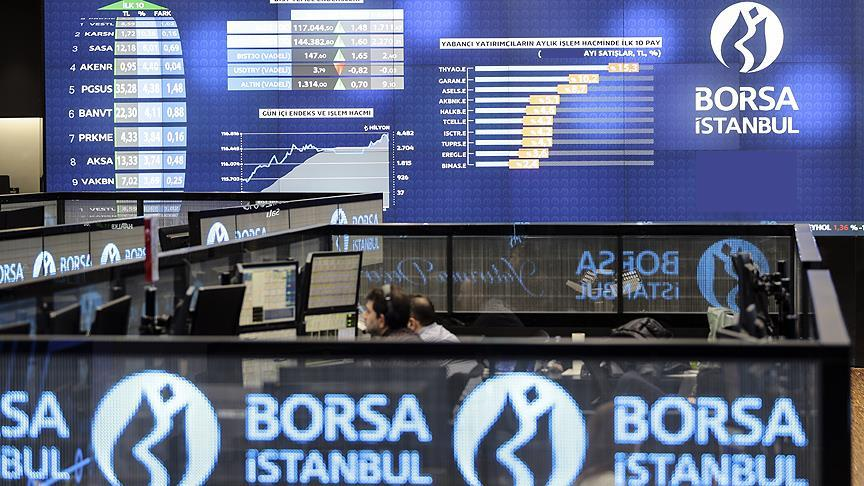
Although the issues of the U.S. statistical agencies are mostly related to the lack of funding and reduction of operations, the case of Türkiye is an opposite but similar issue. The Turkish Statistical Institute (TUIK) has been accused of manipulating inflation data to achieve political objectives. In early 2024, a case was filed stating that TUIK had intentionally understated inflation to reduce pension payments. Private research shows that the actual inflation rate could be almost twice the official rate, leading to distortion in the economy and distrust from citizens. Ex-TUIK officials have also reported political pressure to manipulate data, and since the beginning of 2022, the agency has restricted the transparency of its inflation estimates and refused to provide detailed price data. Although the government has assured the methodological adherence to the international standards, the accuracy of the official figures is doubted by many economists and citizens.
This similarity between the U.S. and Türkiye may draw attention to different outcomes of two unreliable economic statistics in the future as both cases jeopardize the basis of economic decision-making and misrepresent primary indicators such as inflation. The minute these numbers become unreliable, the effects of manipulation could quickly spread across society, bringing a loss of investor confidence, erosion of public trust, and missteps in public policy along.